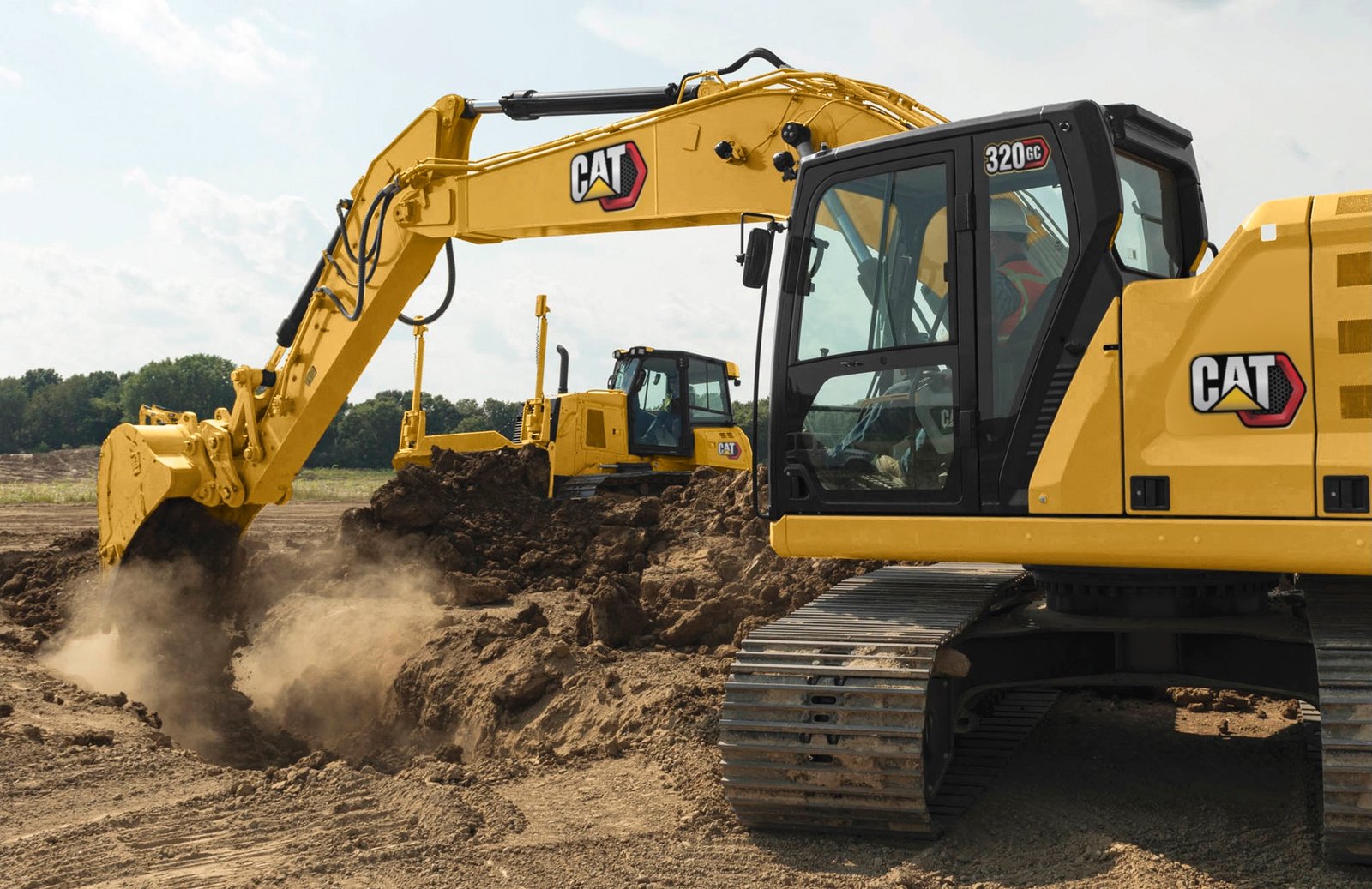
The CAT 320 is one of the best-known excavator models in Caterpillar’s lineup and is widely used for excavation, construction, utility work, and other demanding applications.
If you’re considering buying, renting, or operating a CAT 320, understanding its capabilities is important before making a decision.
In this guide, we’ll look at what the CAT 320 is, what it’s designed for, its major features, common applications, and what to consider when buying a used one.
What Is the CAT 320?
The CAT 320 is a full-size hydraulic excavator designed for a wide range of construction applications.
It’s considerably larger and more powerful than a mini excavator, making it better suited for production excavation, larger utility projects, site preparation, and other jobs where digging performance and productivity are important.
The 320 name has been used across multiple generations of Caterpillar excavators, so specifications can vary significantly depending on the model year and exact configuration.
That is important when comparing machines for sale.
A newer CAT 320 should not automatically be assumed to have the exact same specifications as an older 320.
What Is the CAT 320 Used For?
The CAT 320 is a versatile excavator that can be used for many types of work.
Common applications include:
- Site preparation
- Foundation excavation
- Utility installation
- Trenching
- Road construction
- Land clearing
- Material handling
- General excavation
- Demolition with appropriate attachments
The machine can also use different buckets and hydraulic attachments depending on its configuration.
CAT 320 Size
The CAT 320 is a full-size excavator, but its exact dimensions and operating weight depend on the specific generation and configuration.
Important specifications to check when comparing machines include:
- Operating weight
- Engine power
- Maximum digging depth
- Maximum reach
- Bucket capacity
- Tail swing
- Transport width
- Transport height
- Hydraulic flow
- Ground clearance
If you’re buying a used CAT 320, always verify the specifications for the exact serial number and model configuration rather than relying on a generic specification sheet.
CAT 320 Engine
The engine configuration varies depending on the generation of the CAT 320.
When evaluating a machine, don’t just look at horsepower.
Also consider:
- Engine hours
- Maintenance history
- Fuel consumption
- Service records
- Emissions configuration
- Previous applications
- Major engine repairs
A machine with a strong service history can be much more attractive than one with fewer hours but poor maintenance records.
CAT 320 Hydraulic System
Hydraulic performance is one of the most important aspects of any excavator.
The hydraulic system powers functions including:
- Boom movement
- Stick movement
- Bucket movement
- Swing
- Travel
- Hydraulic attachments
When inspecting a used CAT 320, test all major hydraulic functions.
Look for:
- Slow movement
- Weak digging force
- Jerky operation
- Hydraulic leaks
- Excessive noise
- Cylinder leakage
- Unusual hydraulic behavior
If you’re purchasing a machine, consider having an experienced technician perform a complete hydraulic inspection.
CAT 320 Bucket Options
The right bucket can make a significant difference in productivity.
Depending on the application, a CAT 320 may be configured with different bucket types.
Examples include:
- General-purpose digging buckets
- Heavy-duty buckets
- Rock buckets
- Grading buckets
- Specialized buckets
The best bucket depends on the material you’re excavating and the type of work you’re performing.
Using an inappropriate bucket can reduce productivity and increase wear.
CAT 320 Attachments
One of the biggest advantages of an excavator like the CAT 320 is the ability to use different attachments.
Depending on the machine’s hydraulic configuration, applications can include:
- Hydraulic breakers
- Thumbs
- Grapples
- Augers
- Compaction attachments
- Shears
- Specialized demolition tools
Before purchasing an attachment, verify that it is compatible with the excavator’s hydraulic flow, pressure, weight, and mounting system.
CAT 320 vs. Smaller Excavators
One reason contractors choose a machine like the CAT 320 is productivity.
Compared with smaller excavators, a full-size machine can generally move more material and handle larger excavation tasks.
However, bigger isn’t always better.
A CAT 320 requires:
- More transportation capacity
- More working space
- More fuel
- Greater operating costs
- A larger jobsite
For smaller residential projects, a mini or mid-size excavator may be much more practical.
The right machine depends on the job.
CAT 320 Fuel Consumption
Fuel consumption varies depending on the specific model, operating conditions, workload, operator behavior, attachments, and machine settings.
Instead of assuming one universal fuel-consumption number, consider your actual application.
An excavator performing light work will have different fuel consumption from one performing continuous heavy production digging.
When calculating ownership costs, include:
Fuel + maintenance + repairs + transportation + operator + downtime
That gives you a more realistic picture of what the machine costs to operate.
Buying a Used CAT 320
A used CAT 320 can be an attractive option for contractors who want the capabilities of a full-size excavator without paying the price of a new machine.
But careful inspection is essential.
Check the Hour Meter
Hours provide useful information, but they shouldn’t be the only factor you consider.
Look at the hours alongside:
- Machine age
- Maintenance history
- Previous work
- Overall condition
- Component replacements
Inspect the Undercarriage
If the machine is tracked, inspect:
- Track chains
- Track shoes
- Rollers
- Idlers
- Sprockets
Undercarriage repairs can be expensive.
Check the Hydraulic System
Look for leaks and test the machine under load.
Make sure the boom, stick, bucket, swing, and travel functions operate properly.
Inspect the Boom and Stick
Look carefully for:
- Cracks
- Weld repairs
- Bends
- Structural damage
- Excessive wear
Check Pins and Bushings
Excessive play in the front linkage can indicate significant wear.
Repairs can become expensive if several components need attention.
Review Maintenance Records
Ask the seller for service documentation.
Look for evidence of:
- Regular oil changes
- Filter replacement
- Hydraulic service
- Undercarriage work
- Major component repairs
- Scheduled maintenance
A documented history can significantly improve your confidence in a used machine.
How Much Does a CAT 320 Cost?
There isn’t one price for a CAT 320.
Prices vary based on:
- Model year
- Exact configuration
- Operating hours
- Condition
- Attachments
- Location
- Market demand
- Maintenance history
A newer low-hour machine can cost substantially more than an older high-hour machine.
When comparing prices, make sure you’re comparing similar configurations.
A machine advertised at a lower price may have different attachments, hours, or specifications.
CAT 320 vs. Komatsu PC210
The CAT 320 is often compared with machines such as the Komatsu PC210.
Both are popular choices in the full-size excavator category.
When comparing them, don’t focus only on brand reputation.
Compare:
- Purchase price
- Operating weight
- Engine power
- Digging depth
- Reach
- Hydraulic performance
- Fuel consumption
- Maintenance
- Parts availability
- Dealer support
- Resale value
Your local dealer can be one of the most important factors.
If one manufacturer has substantially better support in your area, that may influence the total cost of ownership more than small differences in specifications.
Is the CAT 320 a Good Excavator?
For the right application, the CAT 320 can be an excellent choice.
It’s designed for demanding construction work and offers the versatility expected from a full-size excavator.
However, whether a particular CAT 320 is a good purchase depends on the specific machine.
A poorly maintained excavator with low hours can be a bad investment.
A higher-hour machine with excellent maintenance and major components in good condition can potentially be a much better deal.
Final Thoughts
The CAT 320 is a versatile full-size excavator suitable for a wide range of construction applications.
If you’re considering buying one, don’t judge the machine based solely on its brand, model number, or hour meter.
Look at the exact model, specifications, maintenance history, condition, dealer support, operating costs, and expected resale value.
And if you’re buying used, get the machine inspected before making a major purchase.
The CAT 320 may be the right excavator for your business—but the condition of the individual machine matters just as much as the name on the side.